Why Creating a To-Do List Feels So Good for Women High-Achievers (and the Science of Checking an Item Off)
Confession: I have written a to-do list and included things I have already done that day, just for the thrill of checking it off of my list. If you're a woman who is juggling a career, a family, a side hustle, or all three with a to-go coffee in one hand, you already know the feeling. There is something almost embarrassingly satisfying about writing "call the dentist" on a list and then getting to cross it off.
Turns out, that feeling isn't just in your head.
Well, I mean, it is in your head, technically. But it's backed by actual science, and once you understand what's happening up there, you can use it to your advantage instead of accidentally working against yourself with a to-do list that spirals into overdrive.

The Science of That Satisfying Little Checkmark
Your brain hates loose ends.
Psychologist Bluma Zeigarnik discovered what's now called the Zeigarnik Effect: unfinished tasks stick around in your memory and take up mental real estate, nagging at you far more than tasks you've already completed. That's why "I need to email the vendor" can rattle around in your brain at 11pm even though you have zero intention of emailing anyone while trying to go to sleep. Writing it down and, eventually, checking it off is how you tell your brain "I've got this handled," which frees up mental space for literally anything else…like sleeping.
Progress itself is the reward.
Harvard researcher Teresa Amabile's "Progress Principle" research found that of all the things that boost people's motivation and mood at work, the single most powerful is making progress on meaningful work. This includes even the smallest progress. Not a raise, not a pep talk. Progress. Every single checkmark is a tiny, legitimate win, and your brain treats it like one.
Yes, there's a little dopamine involved.
Completing a task and getting that visual confirmation (hello, checkmark!) taps into your brain's reward pathway. It's the same basic wiring that makes video games and streak counters so addictive- except in this case, the "game" is your actual life, and winning looks like a made bed and a sent invoice.
Here's the part that matters most for high-achieving women specifically: this same wiring that makes lists so satisfying can absolutely be turned against you.
A 47-item list with no priority order doesn't soothe the Zeigarnik effect. In fact, it feeds it, because your brain now has 47 loose ends to keep track of instead of one. The goal isn't more list. It's a smarter list. More on that below.
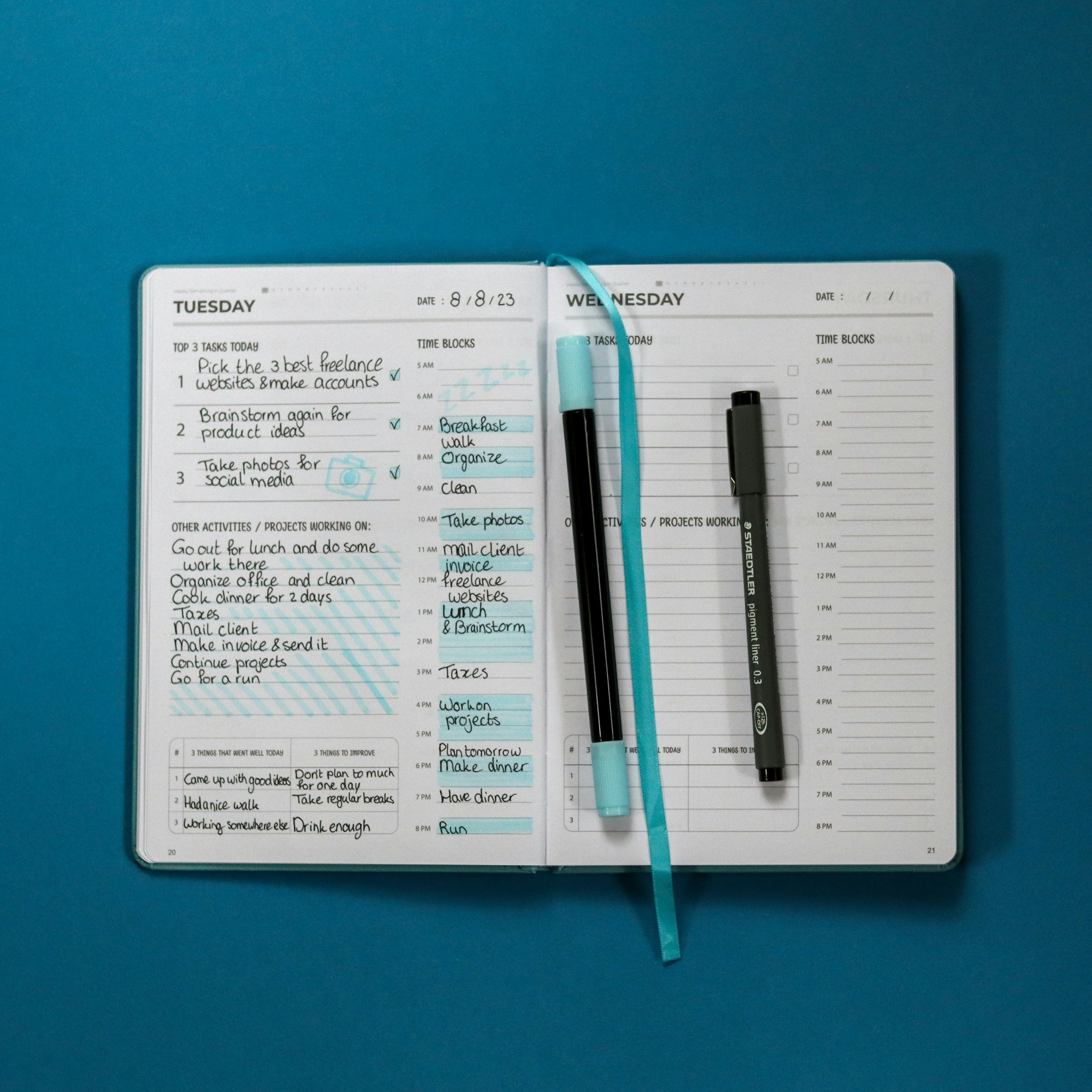
My Actual To-Do List Recommendations (That Don't Send You Into Overdrive)
As someone who has watched plenty of brilliant, high-achieving women (myself included) turn a to-do list into a second full-time job, here's what actually works without feeding the overwhelm:
The Ivy Lee Method. At the end of each day, write down the six most important things you need to do tomorrow, ranked in order of true priority. Tomorrow, you work through them one at a time, in order, and whatever doesn't get finished rolls to the next day's list. Simple, almost annoyingly effective, and nearly 100 years old.
The 1-3-5 Rule. Each day, aim for 1 big thing, 3 medium things, and 5 small things. It sounds like more tasks, but it's actually a relief. It gives every task a "size" so you stop treating "reorganize the garage" and "reply to that email" like they carry equal weight.
The "one main thing" rule. Before you build the whole list, ask yourself: if I only get one thing done today, what has to be that thing? Circle it. Do it first, before your inbox convinces you otherwise.
A weekly brain dump, then a daily short list. Let your weekly list be the messy, everything-in-your-head list. That's where the Zeigarnik effect gets its relief. Then each morning, pull only 3–5 items from it onto your actual daily list. Your weekly list holds the anxiety so your daily list doesn't have to.
Give yourself credit for what you did that wasn't on the list. High-achievers are notorious for discounting the unplanned wins. Keep a small "did it anyway" column. It's good for the nervous system and, frankly, it's just true.
Most Importantly. In the case of someone carrying a 47-item list around, it’s incredibly important to keep your priority list separate from your other non-prioritized items. Analysis paralysis is real, and by keeping your short list of today’s must-do’s on a separate page or a separate Post-it, you are limiting the impact the longer list will have on your day.
And because who said to-do lists can’t be fun….
My Favorite Texas Stationery Stores to Make Organization Fun
Look, if I have to make a to-do list, I want the pen and the paper to spark a little joy too. Here are a few Texas stationery spots worth a visit (or a browse) when you want your planning ritual to feel like self-care instead of a chore:
The Paper + Craft Pantry (Austin) — A cozy Austin shop packed with letterpress cards, planners, and craft supplies. Great for browsing when you want to slow down for twenty minutes.
Paper Place (Austin) — A longtime Austin favorite for fine stationery, invitations, and gifts with a personal touch.
Byrd + Bleecker (Fort Worth) — Gorgeous custom stationery and invitations if you want your handwriting to have a worthy home.
Needle in a Haystack (Dallas) — Technically known for fabric and craft supplies, but their stationery and paper goods section is a hidden gem for planner people.
Moshi Moshi Gifts & Stationery Co. (Houston) — A tiny, delightful shop full of cute, unique stationery finds if your to-do list deserves a little whimsy.
Even if you're a die-hard digital-app person, it's worth an occasional trip to one of these just to remember that organization can be genuinely fun, not just functional.
The best to-do list isn't the one with the most items. It's the one that lets you close your laptop (or your planner) at the end of the day and actually believe you're done. That belief is worth more than any productivity hack.
Sources
Nickerson, C. (2026). Zeigarnik Effect Examples in Psychology. Simply Psychology. https://www.simplypsychology.org/zeigarnik-effect.html
Amabile, T. M., & Kramer, S. J. (2011). The progress principle: Using small wins to ignite joy, engagement, and creativity at work. Harvard Business Review Press.
Elite Performer: How to be Exceptional at Work. (2024). (n.p.): Notion Press.