Don't Touch Me, But I Love You! You're Allowed To Be Touched Out (And What That Really Means For Parents)
Picture this: it's 6pm, someone has been physically attached to you since roughly 6am, and the second you finally sit down, a small hand reaches for your arm and every cell in your body wants to say "if one more person touches me right now, I might actually combust."
And then, thirty seconds later, that same tiny person looks up at you and you'd genuinely take a bullet for them.
Both things are true at the same time.
Welcome to being touched out, one of the most confusing feelings in parenting nobody warns you about.

Wait, "Touched Out" Is an Actual Thing? (Yes, and You're Not a Bad Parent for Feeling It)
Yes. It has a name, experts talk about it, and you are far from alone in it. Family physician Dr. Linda Ojo describes it as "a feeling that if one more person touches you, you will crawl out of your skin", which, if you've felt it, you just audibly went "yessssss!."
Here's the part that matters most: wanting physical space from your child does not mean you love them less, and it definitely doesn't make you a bad parent. Psychotherapist Saima Toppa frames recognizing the feeling as a good thing. It’s a signal you're at the brink, not a character flaw. Writer Amanda Montei goes even further, describing "touched out" as a symptom of a much bigger maternal mental health picture, not a personal failing.
Mothers in particular hit this wall more often, largely because they're still carrying the bulk of hands-on childcare, they lost a certain amount of bodily autonomy during pregnancy and postpartum, and there's real cultural pressure to act like giving your body over constantly is just what "good moms" do without complaint. It's not weakness. It's math. Your nervous system has a limit, and touch is one of the inputs that counts toward it.
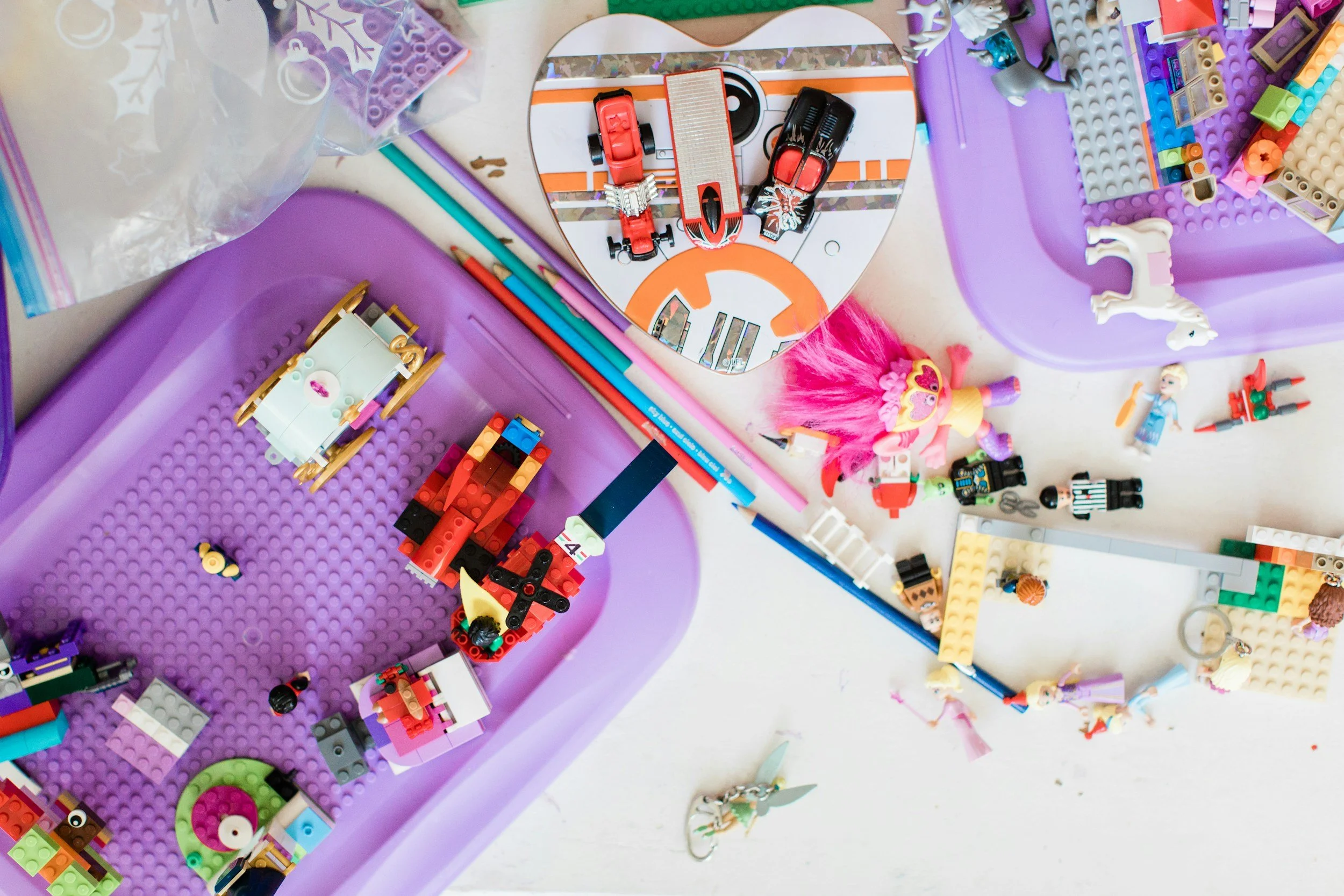
The Science of Sensory Overload When You're "On" All Day
Your brain has a built-in filtering system, sometimes called sensory gating, that screens out most of the noise, texture, and movement around you so you're not consciously processing every single input all day. That filtering takes real neurological effort, and it has a limit.
Two things eat into that limit:
One is just how sensitive your nervous system naturally is. Some people process input more intensely than others, full stop.
Two is your "state load" in any given moment: how tired you are, how stressed, how hungry, how touched-out from the last six hours. Add a kid climbing on you, another one talking at full volume, the dog barking, and dinner burning, and you're not being dramatic, your nervous system is running past what it can filter. That's not you failing to cope. That's biology doing exactly what it's designed to do when the input exceeds the intake valve.
The Guilt Spiral: When Needing a Break Feels Like Failing Them
Here's where the guilt usually kicks in: you step away for five minutes, or you flinch when they climb on you for the tenth time that hour, and suddenly you're spiraling about whether you're damaging them. Take a breath, because the research actually backs you up here.
A study published in the Journal of Marriage and Family, using decades of longitudinal data, found no meaningful link between the number of hours mothers spend with their kids and how those kids turn out later in life.
What did matter was parental stress.
Co-author Melissa Milkie noted that stress affects children's outcomes across the board, meaning a stressed-out, touched-out parent forcing themselves to stay "on" may do more harm than the same parent taking five honest minutes to reset. The guilt isn't proportional to how good a parent you are, it's proportional to how high the cultural bar got set.
How to Ask for Physical Space Without It Feeling Like Rejection
The good news is that you can ask for space in a way that teaches your kid something valuable instead of making them feel shut out.
Here’s how to model healthy requests for physical space with your toddler or child:
Name it plainly and warmly. "Mommy needs a minute where nobody's touching me, and then I'm all yours" is concrete, not confusing. Kids handle clear information better than a parent silently pulling away.
Pair the "no" with a "yes." "I don't want to be climbed on right now, but I'd love a high five" or "not a hug right now, but tell me about your day" keeps connection open even while touch is off the table.
Model it as a boundary, not a rejection. Experts who study kids and consent point out that children learn what healthy boundaries actually look like by watching adults set them respectfully, not by never encountering a boundary at all. When you calmly say "my body needs space right now," you're teaching them they're allowed to say the same thing someday.
Keep the follow-through short and honest. A few minutes of real space, then coming back and re-engaging, teaches your kid that a boundary is temporary and safe, not the beginning of you disappearing.

Small Resets That Help When You Can't Just Leave the Room
Sometimes a solo walk around the block isn't in the cards.
Here's what actually helps re-set the “touched out” feeling in sixty seconds or less:
Step into another room, even the bathroom, for a minute of true quiet. A short environmental escape lets your nervous system's filtering catch up.
Try a physiological sigh. Two quick inhales through your nose, then one long exhale through your mouth. It's a fast, research-backed way to nudge your body out of overload mode.
Run cold water over your wrists or splash your face. The temperature shift activates your parasympathetic nervous system — the "calm down" side of things — quickly.
Give yourself deep pressure on your own terms. A self-hug, crossing your arms and squeezing, or leaning into a couch cushion can meet your body's need for pressure without another person's hands doing it.
Protect a low-input window later. Even fifteen quiet, phone-down minutes after bedtime helps your nervous system actually recover instead of staying keyed up until tomorrow's touch marathon starts again.
The Bottom Line
Being touched out isn't a sign you love your kid less, and it isn't a problem you need to white-knuckle through in silence. It's your nervous system telling you the truth about its limits and listening to it. Handling it with a little honesty and a sixty-second reset, is what actually lets you keep showing up for the good, connected, hands-on parenting you want to be doing. You're allowed to need a minute. You're allowed to say so. And you're still exactly the loving parent you were five minutes ago.